Ireland – Final field visit 30 September 2026
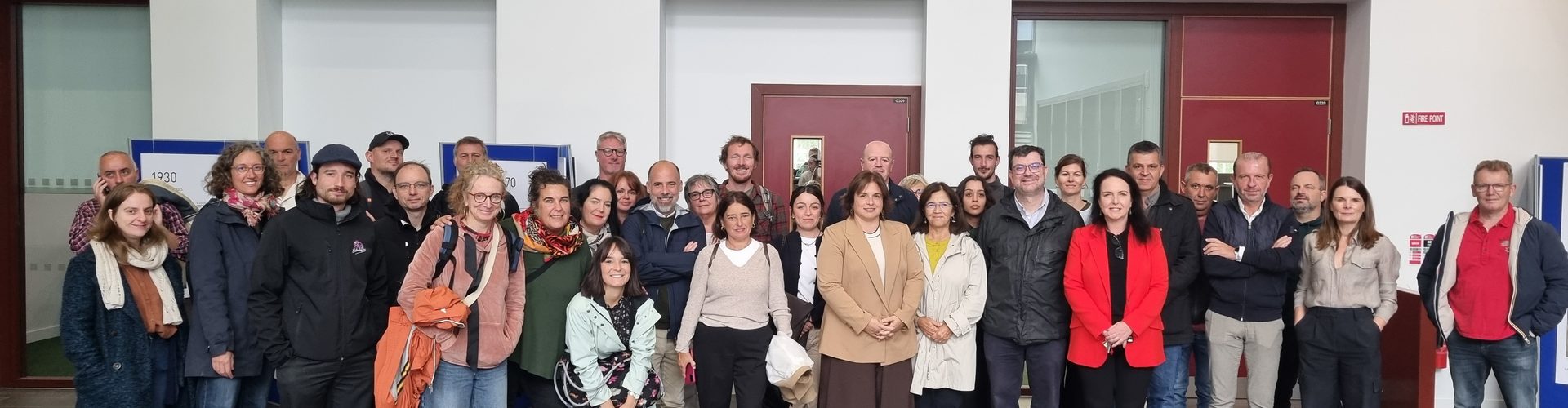
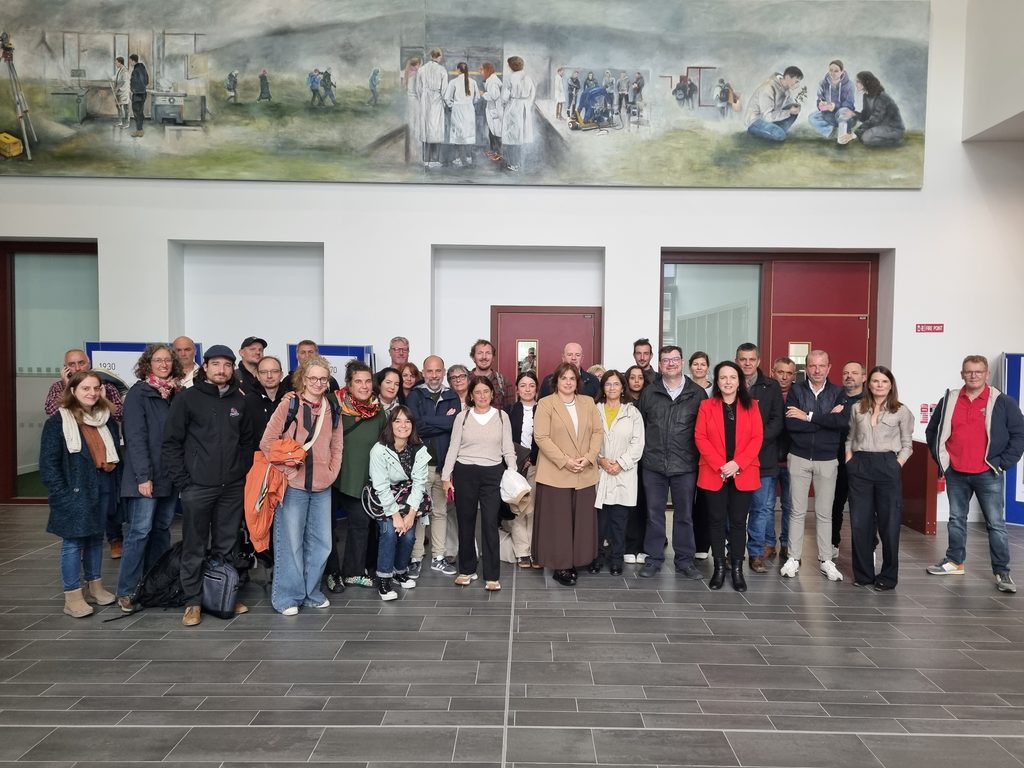
A last field visit across the Beara Peninsula for the FISHINN project and its partnersThe final field visit of the FISHINN project took place in the south west of Ireland, hosted by our lead Irish partner, Munster Technological University. For a full day, delegations from Ireland, France, Portugal and the Basque Country came together in Kerry to explore the region’s fisheries and marine economy. The four partner regions were joined by a broad mix of stakeholders: fisheries associations and committees, public bodies, fishers, local authorities and research institutions.
The field visit was followed on 1 October by the FISHINN final conference in Dingle (watch the replay).
Morning (Castletownbere)
- Port of Castletownbere – The visit began at the Port of Castletownbere, Ireland’s largest whitefish port. Participants saw the scale and operation of the port and its role as the landing and servicing centre for the south west fleet.
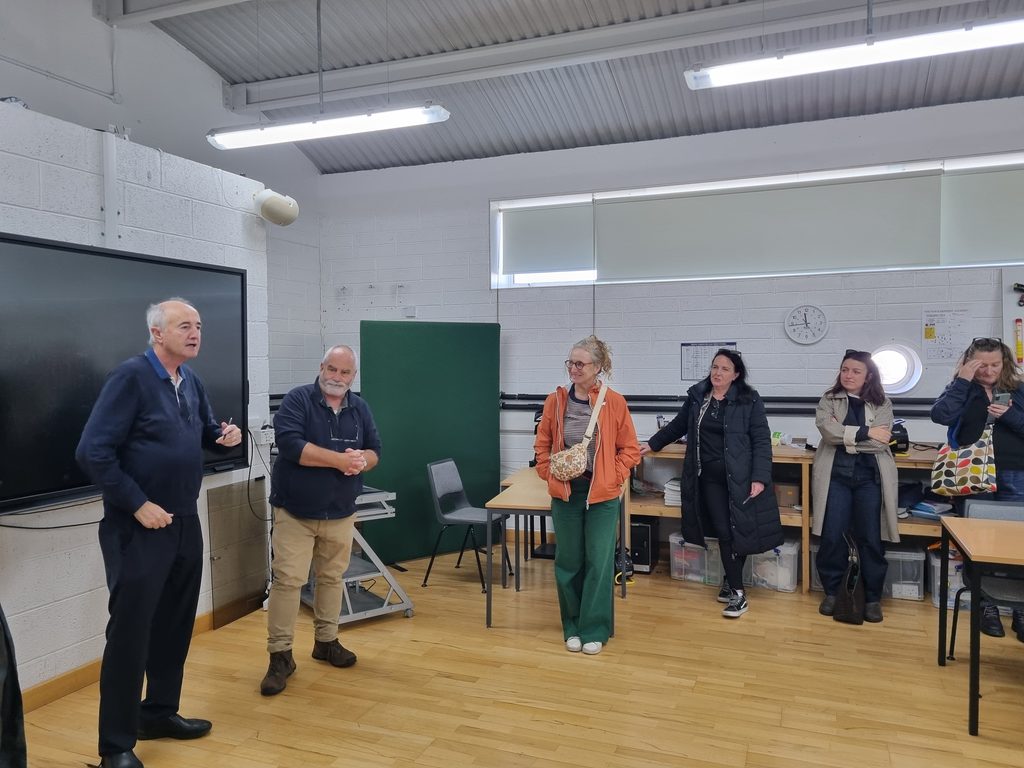
- National Fisheries College of Ireland (Bord Iascaigh Mhara) –The group visited the National Fisheries College of Ireland, which provides certified training for the Irish fleet. The visit focused on the role of training and education in sustaining the sector and in developing the skills the industry will need, a theme common to all four partner regions and one directly comparable with the fishing and aquaculture schools in Ondarroa.
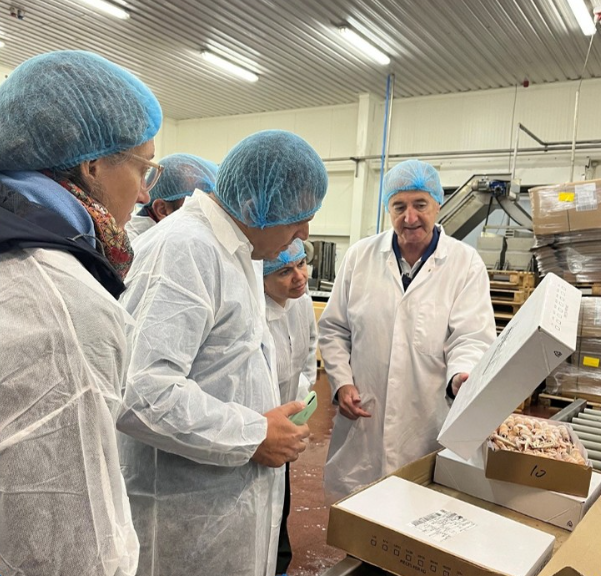
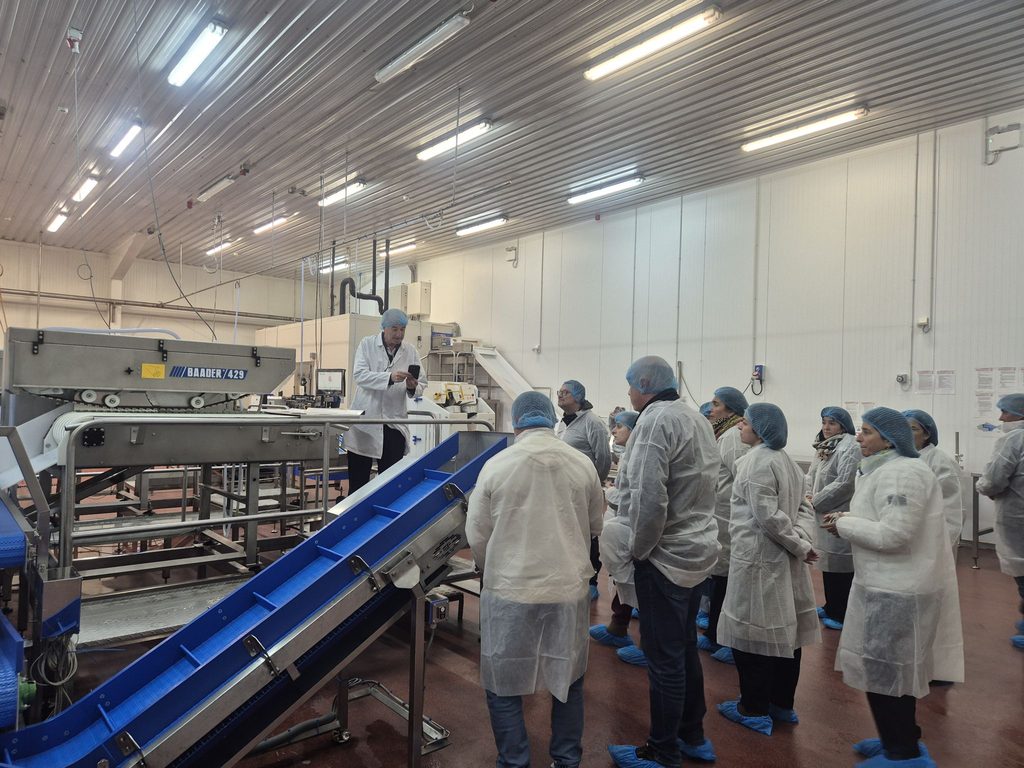
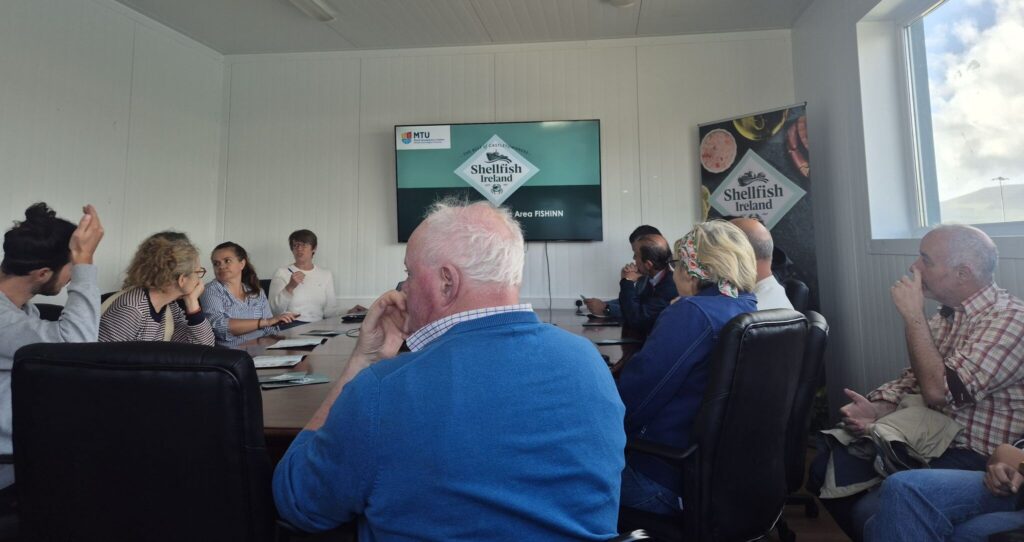
- Castletownbere Fishermen’s Co-operative & Shellfish Ireland (Dinish Island): Participants met John Nolan, Managing Director of the Castletownbere Fishermen’s Co-operative, and saw processing operations at first hand. The session covered the relationship between fishing, processing and the wider local economy, and the position of the co-operative model in holding value within the port community.
Afternoon (Beara Peninsula)
- Pure Ocean Algae (Cahermore, Allihies) – The field visit continued west along the Beara Peninsula to Pure Ocean Algae. The visit focused on seaweed and algae production as a route to diversification within the blue economy, and on the practical questions of harvesting, processing and market access that determine whether such operations are viable in a remote coastal location.
- Beara Distillery (Derrymihin West) – The day concluded at Beara Distillery with a tour and tasting. The distillery uses Atlantic seawater and sugar kelp as botanicals, illustrating how marine resources can support economic activity and product development outside the seafood sector itself.
Key Insights & Next Steps
- Cooperation : continued exchange of good practices between the four regions, in line with the project’s approach since its launch
- Atlantic networks: direct working relationships established between organisations, research centres and blue bioresource and biotechnology operators of the partner regions
- Shared challenges: discussion around our same challenges to adress : training, added value beyond the first sale and diversification towards new marine products
Looking ahead, reflections are under way on new projects in the blue economy and innovation, to keep the FISHINN network alive and continue supporting innovation in the fisheries sector.
We warmly thank our colleagues at Munster Technological University for hosting us and organising this field visit, as well as all the local organisations that welcomed the delegations and shared their expertise.